Lost in Translation? Not on Her Watch: The Hidden Craft Behind Tsugumi Kataoka's English Subtitles
There's a moment in one of Tsugumi Kataoka's most talked-about scenes — you probably know the one — where she delivers a single line in a near-whisper, her face doing most of the heavy lifting. American audiences who watched it subtitled described it as gut-punching. Devastating. One of the most quietly powerful things they'd seen on a streaming platform in years.
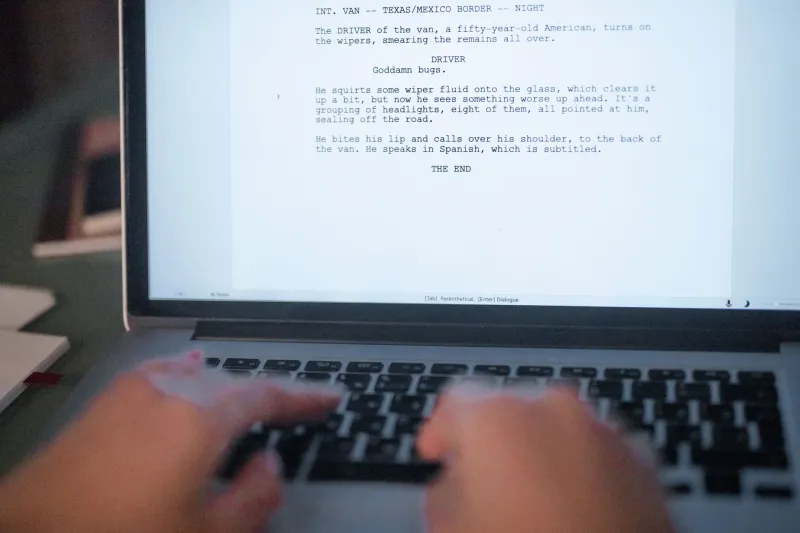
But here's the thing almost nobody talks about: the words you read in that moment weren't just translated. They were chosen. Carefully, deliberately, by someone sitting at a desk far from any film set, wrestling with the gap between two languages and trying to make sure what landed in your chest landed the right way.
That's the world of subtitle translation. And when it comes to Tsugumi Kataoka's work reaching US audiences, it's a world that deserves a lot more attention than it gets.
Why Translation Is Never Just Translation
Here's what most viewers don't realize: Japanese and English don't just differ in vocabulary. They operate on fundamentally different emotional frequencies. Japanese communication often leaves enormous amounts unsaid, relying on implication, social register, and silence to carry meaning. English, especially in an American entertainment context, tends toward directness. When a translator bridges those two systems, they're not just swapping words — they're making interpretive calls about what a character means, not just what they say.
For a performer like Kataoka, whose entire technique is built on restraint and subtext, that gap is especially high-stakes. She's an actress who routinely says one thing while meaning three others. Her characters carry contradictions. They smile when they're breaking. They speak formally when they're furious. A clumsy translation doesn't just lose a nuance — it can actively undermine what she's built.
Subtitle translators who've worked on Japanese prestige dramas describe this as one of the most technically demanding parts of the job. You're not just a linguist. You're a dramaturg, a character analyst, and a split-second editor all at once — with a strict character count per line staring you down the whole time.
The Specific Challenge of Kataoka's Dialogue
Kataoka's characters tend to speak in ways that are deceptively plain on the surface. She gravitates toward roles where the dialogue itself is sparse — where what's not said in a line is as important as what is. Translators working on her projects have noted that her scenes often feature what one described as "loaded minimalism": short sentences that carry enormous contextual weight.
The challenge is that in Japanese, a lot of that weight is embedded in grammatical particles, honorific levels, and sentence-final expressions that simply don't have English equivalents. When a Kataoka character drops to a more casual speech register mid-conversation, it signals a seismic emotional shift to a Japanese audience. In English, there's no clean way to replicate that. The translator has to find another way — a word choice, a contraction, a slight restructuring — that creates a comparable ripple without the original mechanism.
This is craft. Serious, painstaking craft. And it happens largely in anonymity.
Reading the Performance, Not Just the Script
The best translators working on projects featuring Kataoka aren't just working from transcripts. They're watching the performances. Repeatedly. They're clocking where she pauses, where her voice drops, where her delivery contradicts the literal meaning of her words. Because a subtitle that's technically accurate but emotionally misaligned with what's happening on screen creates a kind of dissonance — viewers feel it even if they can't name it.
This is especially true for comedy and irony, two registers where Kataoka has proven she can operate with precision. Sarcasm in Japanese doesn't always read as sarcasm in direct translation. A line that's clearly playful in its original delivery can come across as sincere — or even hostile — if the subtitle doesn't do some quiet work to signal the tone. Translators describe watching her facial expressions as a kind of second text, one that tells them which emotional lane the subtitle needs to stay in.
Dialogue coaches working on her English-language adjacent projects face a slightly different version of the same problem. When Kataoka performs in English, or when her dialogue is being adapted for English dubbing, coaches have to help preserve the specific rhythmic quality of her delivery — the way she builds a sentence, where she breathes, what she emphasizes. Her cadence isn't accidental. Flattening it in translation or coaching is like repainting a Rothko in house paint.
What Gets Sacrificed (And What Doesn't Have To)
Every translation involves loss. That's just the reality. But the translators who care deeply about Kataoka's work talk about the difference between necessary loss and careless loss. Necessary loss is when a concept genuinely has no English analog and you do your best with the tools you have. Careless loss is when a translator reaches for the most obvious English word and doesn't stop to ask whether it's the right one.
One recurring example in discussions among J-drama translation communities is the word tsurai — a Japanese term that roughly means painful or hard, but carries emotional layers that "painful" in English doesn't fully capture. It's the kind of word Kataoka's characters use at crucial moments. How a translator handles it — "it hurts," "this is hard," "I can't bear this" — changes the emotional temperature of a scene. None of those choices are wrong. But they're not identical, either.
The translators who do this work with real intentionality are essentially co-authors of the American audience's experience of Kataoka's performances. That's not an overstatement. It's just an honest accounting of how meaning travels.
The Credit They Don't Get
Here's the uncomfortable truth: most viewers who fell in love with a Tsugumi Kataoka performance through subtitles couldn't name the translator who made that experience possible. Subtitle credits are often buried in end rolls that audiences skip, or omitted from streaming platform interfaces entirely. The work is invisible by design.
There's a growing conversation in both the translation community and among J-drama fans about changing that — about treating subtitle translation as the creative labor it actually is, and giving the people who do it the recognition that reflects their contribution. For a performer whose international profile is as carefully built as Kataoka's, the quality of that translation work is genuinely part of her artistic legacy abroad.
Because when you watch Tsugumi Kataoka and feel something — really feel it, in that specific way her performances tend to land — you're experiencing a collaboration. The actress in front of the camera, and the translator at a desk somewhere, working late, watching the same scene for the twelfth time, trying to find exactly the right word.
That's not a small thing. That's the whole thing.