How Tsugumi Kataoka Taught Western Journalists to Ask Better Questions
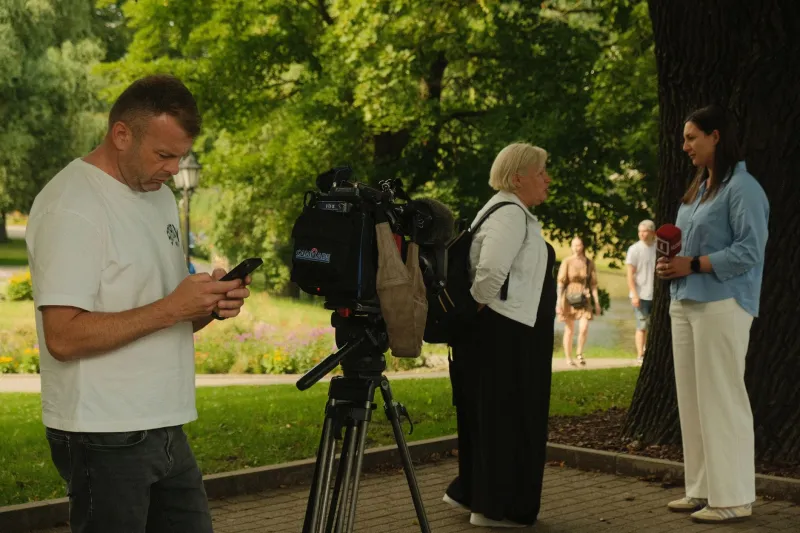
There's a version of the celebrity press interview that most of us know by heart. The publicist-approved talking points. The safe, slightly vague answers. The journalist who came in with a list and is just working through it. Both sides perform their roles, nothing surprising gets said, and everyone goes home.
Then there's a Tsugumi Kataoka interview — and it tends to go somewhere else entirely.
The Old Playbook, and Why It Failed Asian Artists
For a long time, the way Western entertainment media engaged with Japanese and East Asian performers followed a pretty predictable script. Questions centered on novelty rather than craft. There was often an implicit framing that positioned the artist as a visitor to American culture rather than a participant in global culture. Interviewers asked about food, about culture shock, about whether they found Americans friendly. They treated language barriers as the whole story rather than one small part of a much bigger one.
The result was coverage that flattened complex, accomplished artists into cultural curiosities. It wasn't always malicious — a lot of it was just lazy, and rooted in assumptions that nobody had thought to examine. But the effect was the same: Japanese performers in American media spaces were often reduced to their foreignness rather than elevated by their work.
Tsugumi Kataoka stepped into that environment and did something quietly remarkable. She refused to play along.
Redirecting Without Shutting Down
What makes Kataoka's interview style so distinctive — and so instructive — is that she doesn't deflect bad questions with hostility or awkwardness. She answers them differently. She takes a question about cultural adjustment and turns it into a conversation about character motivation. She takes a surface-level prompt about her language experience and steers it toward craft, toward the specific technical challenges of performing emotion across linguistic registers.
The effect is that the journalist ends up somewhere more interesting than where they started, often without fully realizing how they got there. It's a kind of graceful redirection that requires both intelligence and patience in equal measure.
In one widely circulated interview from a major American entertainment outlet, a journalist opened with a question that was pretty clearly designed to elicit a heartwarming fish-out-of-water anecdote. Kataoka acknowledged the premise briefly, then pivoted to a discussion of how her approach to physicality in performance changes depending on the cultural context of a scene. By the end of the exchange, the journalist was asking genuinely probing questions about the relationship between body language and emotional subtext. It was a different interview than either of them probably expected.
Setting a New Standard in the Room
Here's the thing about that kind of exchange: it doesn't just affect one interview. It affects the next one, and the one after that. Journalists talk to each other. Clips circulate. Editors watch what gets engagement and what doesn't. When an interview with Tsugumi Kataoka consistently yields richer, more compelling material than the standard celebrity Q&A, people start to notice — and some of them start to adjust their approach.
Several entertainment journalists who have covered Kataoka have spoken in general terms about how her responses changed the way they prepared for subsequent interviews with other Japanese and Asian artists. When you've had a conversation that goes somewhere real, you start to want that more consistently. You start to do more homework. You start to bring questions that respect the complexity of the person you're talking to.
That's a ripple effect that extends well beyond Kataoka herself.
The Craft of Being Understood
It's also worth recognizing the specific skill set involved in what Kataoka does in these moments. Communicating across a language gap — even when you're highly proficient in both languages — requires a particular kind of precision. You can't rely on idiomatic shortcuts or assumed cultural shorthand. You have to be clear, deliberate, and often more explicit about your meaning than a native speaker would need to be.
For Kataoka, this constraint seems to have become a genuine asset. Her explanations of her own process are unusually clear because she's had to develop the vocabulary to make herself understood to audiences who don't share her cultural reference points. She doesn't assume you know what she means — she shows you. And in doing so, she often illuminates aspects of performance craft that even native English-speaking artists struggle to articulate.
Beyond the Individual Conversation
What Tsugumi Kataoka has demonstrated, interview by interview, is that the problem was never really about language or cultural distance. The problem was about the assumptions journalists brought into the room — and the willingness of those journalists to examine and revise them.
By consistently modeling a different kind of engagement, she's made a quiet but measurable contribution to how American media thinks about and talks to Japanese artists. Not through advocacy or public statements, but through the simple act of showing up fully and refusing to be flattened.
That's a form of influence that doesn't get nearly enough credit. But for anyone paying attention to the arc of these conversations over time, the shift is unmistakable.