More Than an Accent: The Dialect Work That Makes Tsugumi Kataoka's Characters Feel Real
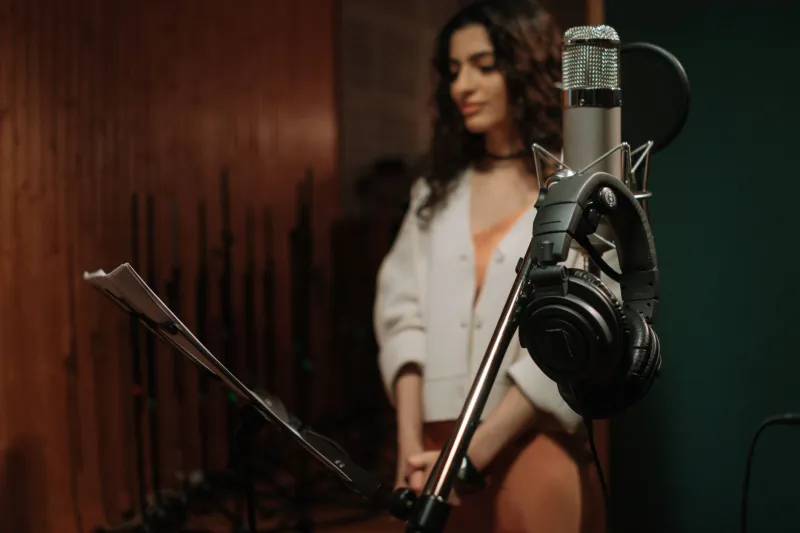
There's a moment in a behind-the-scenes clip that's been circulating among Tsugumi Kataoka fan communities for a while now. She's mid-conversation with a dialect coach, and she stops herself three words into a sentence, shakes her head slightly, and starts over — not because she got the words wrong, but because the feeling behind them wasn't landing the way she wanted. That kind of obsessive attention to sound, to cadence, to the emotional weight carried inside a regional accent, is exactly what separates her approach from the average "foreign actress learns English" story.
Because Kataoka isn't just learning English. She's learning accents within English — and she's treating each one like a character-building exercise in its own right.
Why Regional Dialect Matters More Than You Think
For American audiences, regional accents carry a ton of subtext. A Southern drawl signals one set of cultural assumptions. A clipped Boston accent signals another. A flat Midwestern delivery, a lilting Pacific Northwest rhythm — these aren't just sounds. They're shorthand for where someone comes from, how they were raised, what they've been through. Actors who get this right earn an almost unconscious trust from audiences. Actors who get it wrong break the spell instantly.
Kataoka seems to understand this intuitively, which is remarkable given that English isn't her first language and Japanese phonology is about as structurally different from English as it gets. Japanese is largely syllable-timed, with relatively consistent vowel sounds and minimal stress variation. English, by contrast, is stress-timed, full of vowel reduction, and wildly inconsistent depending on what part of the country you're in. Bridging that gap is hard enough. Bridging it and layering a specific regional dialect on top? That's a whole different level of work.
The Process, As Best We Can Piece It Together
Kataoka has touched on her language preparation in a handful of interviews over the years, and the picture that emerges is one of genuine immersion rather than surface-level mimicry. She's mentioned spending weeks with audio recordings — not just of professional voice actors or other performers, but of real people from the region her character inhabits. Podcasts, local news broadcasts, documentary interviews. Anything that gives her access to how ordinary people in a specific place actually talk.
She's also spoken about working closely with dialect coaches who specialize in cross-cultural phonetics — coaches who can help a non-native speaker understand not just how to produce a sound, but why it exists in the mouth the way it does. The difference between a New York "cawfee" and a standard American "coffee" isn't random — it's rooted in historical migration patterns, class dynamics, borough-by-borough identity. Understanding that context, Kataoka has suggested, helps her access the accent emotionally rather than just technically.
And that emotional access is clearly the goal. In one interview, she described the accent as a kind of costume for the voice — something that, once you wear it long enough, starts to change how you move and think and react. That's a very actor-brained way to think about phonetics, and it explains why her dialect work tends to feel inhabited rather than performed.
The Specific Challenges of Japanese-to-English Code-Switching
Here's something that doesn't get talked about enough: for a native Japanese speaker, certain English sounds are genuinely difficult to produce consistently under the pressure of an emotional scene. The "l" versus "r" distinction is the famous one, but it barely scratches the surface. English has consonant clusters that don't exist in Japanese. It has vowel sounds that require mouth shapes Japanese speakers rarely use. And regional dialects often exaggerate or distort standard English sounds in ways that add another layer of complexity.
What makes Kataoka's work impressive is that these challenges don't show up on screen. There's no sense of her managing technical difficulty in the middle of an emotionally demanding moment. The accent becomes invisible — which is the whole point. When you're watching a character, you shouldn't be thinking about how hard it was for the actor to sound like that. You should just believe them.
Dialect coaches who work with international actors often talk about the "automaticity threshold" — the point at which a learned sound pattern stops requiring conscious effort and just becomes part of how the actor is operating in a scene. Getting there takes a lot of repetition, a lot of muscle memory, and a lot of trust in the process. Based on what we see in her performances, Kataoka consistently clears that threshold.
Language as Character Architecture
What really sets her approach apart is that she doesn't treat the accent as a finishing touch — something you add after you've figured out the character. She treats it as a foundational element, something that shapes the character from the inside out.
This makes sense when you think about it. The way we speak is deeply tied to who we are. Rhythm, pitch, the specific words we reach for under stress — all of it is encoded with identity. For Kataoka, learning a regional dialect isn't just about sounding authentic. It's about understanding who this person is at a cellular level, where they come from, what they carry with them every time they open their mouth.
That's a sophisticated approach to acting under any circumstances. The fact that she's doing it across a language barrier — working in her second language, navigating a phonological system that's genuinely foreign to her native tongue — makes it even more striking.
What Fans Are Noticing
Within fan communities, Kataoka's dialect work has become something of a dedicated area of appreciation. You'll find threads on Reddit and fan forums where people break down specific scenes, comparing her pronunciation choices across different projects, pointing out the subtle shifts in rhythm and intonation that signal a change in a character's emotional state. It's the kind of granular attention that performers usually only get from fellow actors and linguists — and it says something about how compelling her craft is that everyday fans are going this deep.
Some fans who are themselves non-native English speakers have talked about finding Kataoka's work genuinely inspiring — proof that language barriers don't have to be ceilings, that with the right approach and enough commitment, you can inhabit a voice that isn't naturally yours.
The Bigger Picture
There's a broader conversation happening right now about representation, authenticity, and the global nature of entertainment. Kataoka's dialect work sits right at the center of that conversation. She's not asking American audiences to meet her halfway — she's doing the hard work of fully entering the linguistic and cultural space her characters inhabit. And she's doing it without erasing where she comes from.
That balance — full commitment to the role, full awareness of her own identity — is what makes her approach worth studying. Whether you're an acting student, a linguistics nerd, or just someone who keeps noticing that something feels unusually right about her performances, the answer is probably somewhere in the hours she spent with a recording and a dialect coach, getting a vowel sound exactly where it needed to be.