What Happens Before the Camera Rolls: The Private World of Tsugumi Kataoka's Emotional Prep
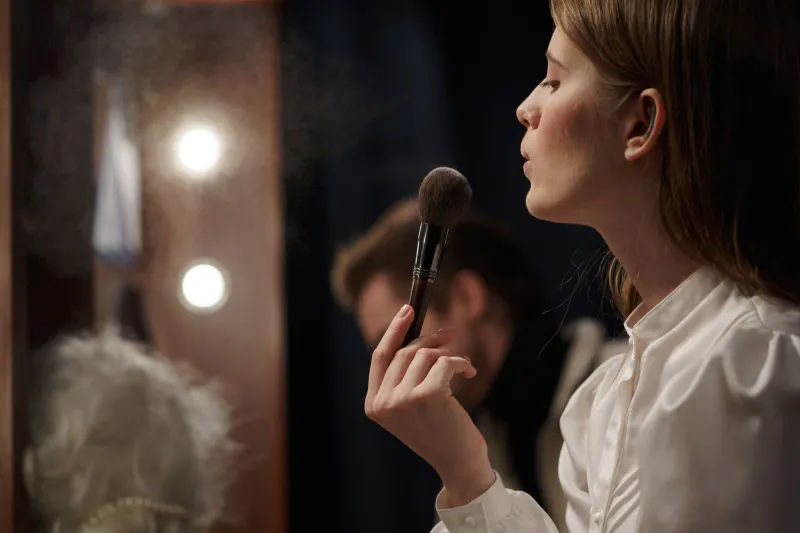
There's a moment that several crew members on various Tsugumi Kataoka productions have described in almost identical terms — and it's not a moment you'd ever see in a finished film or series. It happens in the minutes before a particularly heavy scene. The set goes a little quieter. People instinctively lower their voices. And Kataoka, somewhere just outside the frame of the action, is doing something that looks, from the outside, almost like nothing at all.
But that's exactly the point.
The Stillness That Isn't Still
For fans who've spent time watching Kataoka work — whether in her earlier Japanese TV dramas or the more internationally visible projects that have brought her to a wider American audience — the emotional precision of her performances can feel almost supernatural. Like she just knows where the feeling lives and walks straight into it.
What actually gets her there is considerably more grounded, and considerably more demanding.
Directors who've collaborated with Kataoka have noted that she treats the time between setups not as downtime, but as the actual work. While other cast members might run lines, scroll their phones, or grab coffee, she tends to step into a kind of interior space that the people around her have learned to recognize and respect.
"You could tell when she was in it," one production crew member from a mid-career drama project recalled in a behind-the-scenes interview. "Nobody would interrupt her. Not because anyone told us not to — it just felt obvious. She wasn't doing anything dramatic. She was just... inside something."
Breath as a Tool, Not a Metaphor
One of the most consistent elements observers describe is Kataoka's deliberate use of controlled breathing before emotionally taxing scenes. This isn't the casual deep-breath-before-a-hard-conversation kind of breathing most people do without thinking. It's structured, rhythmic, and clearly practiced.
Actors across disciplines — from stage to screen — have long used breath work as a way to regulate the nervous system and access emotional states without forcing them. For Kataoka, it seems to function as something like a tuning fork. Rather than working herself up into a feeling, she appears to use breath to clear everything else out, creating a kind of internal quiet that the emotion can then move through.
This distinction matters more than it might seem. Performances that come from forcing emotion tend to read as performed — audiences can feel the effort, even if they can't name it. Performances that emerge from a cleared, receptive state tend to feel lived-in. Kataoka's most affecting work has that quality in abundance.
The Psychology of Inhabiting Someone Else's Pain
What makes Kataoka's approach especially interesting to people who study performance is that she doesn't appear to use straightforward emotional recall in the traditional sense — the technique where an actor draws on personal memories to generate authentic feeling. Or at least, not exclusively.
Instead, collaborators describe her as building a kind of psychological architecture for each character. She arrives on set having already done the interior work: understanding not just what a character is feeling in a given scene, but why they feel it, what they're afraid of, what they're protecting, what they can't say out loud.
By the time a scene begins, she's not reaching for the emotion — she's already standing inside the character's logic. The feeling follows naturally from being in that place, rather than being manufactured on cue.
A director who worked with her on a particularly demanding dramatic series described it this way: "She would ask questions during prep that weren't about the scene itself. They were about what happened to this person before the story started. She was building something you'd never see directly — but you'd feel all of it."
The Physical Language of Vulnerability
Kataoka's preparation also extends to her body in ways that go beyond standard physical warm-ups. People who've watched her work up close note that she pays careful attention to how her character carries themselves physically — not just posture or gesture in the obvious sense, but the micro-level stuff. The way someone holds tension in their jaw when they're trying not to cry. The way grief makes people's hands move differently than they normally do.
This kind of somatic detail is what separates technically accomplished acting from the kind that makes viewers feel like they're watching something real unfold. And it requires a level of physical self-awareness that most people simply don't develop without years of dedicated work.
For American audiences who've discovered Kataoka through streaming platforms — often without subtitles being the first thing they notice, because her physical performance is already communicating everything — this is a big part of why she translates so powerfully across language and cultural context. The body doesn't need translation.
What the Crew Sees That Audiences Don't
There's something worth sitting with here, which is that most of what makes Kataoka's performances extraordinary happens in spaces the audience never accesses. The prep work, the quiet moments between takes, the interior architecture she builds for each character — none of that shows up in a press release or a behind-the-scenes clip. It's invisible labor, and it's enormous.
Crew members across her projects consistently describe a kind of mutual respect that develops around this process. Nobody's asked to tiptoe around her — it's more that people recognize they're in the presence of someone taking the work seriously at a level that demands a certain kind of attention in return.
"It changes how you do your job," one set dresser noted in an interview about a production she'd worked on. "When someone's bringing that much to it, you want to bring more too. It raises everything."
The Cost of Going There
It would be incomplete to talk about Kataoka's preparation without acknowledging what it takes out of a person to work this way. Sustained emotional depth — the kind required to deliver multiple takes of an intensely vulnerable scene across a long shooting day — is genuinely taxing. Physiologically, psychologically, in ways that don't fully reset between takes or even between shooting days.
Kataoka has spoken, in select interviews, about the importance of what happens after difficult scenes as much as what happens before them. The coming-down process, the deliberate act of stepping back out of a character's emotional state, is its own discipline. Staying in it too long has real costs. Leaving it too abruptly has different ones.
The fact that she's been doing this work at a high level for as long as she has — and continues to deepen rather than flatten — suggests she's found a sustainable relationship with the intensity her process demands.
Why It Matters to Watch Her Work
For fans, there's something genuinely meaningful about understanding the preparation behind performances that have moved you. It doesn't demystify the magic — if anything, it makes the whole thing more impressive. Knowing that what you're watching on screen is the visible tip of an enormous iceberg of invisible work changes how you receive it.
Tsugumi Kataoka's most vulnerable scenes hit the way they do because she's already been in that place long before the camera starts rolling. The silence between takes isn't empty. It's where the real performance begins.


