The Directors Who Keep Coming Back: Inside Tsugumi Kataoka's Most Powerful Creative Alliances
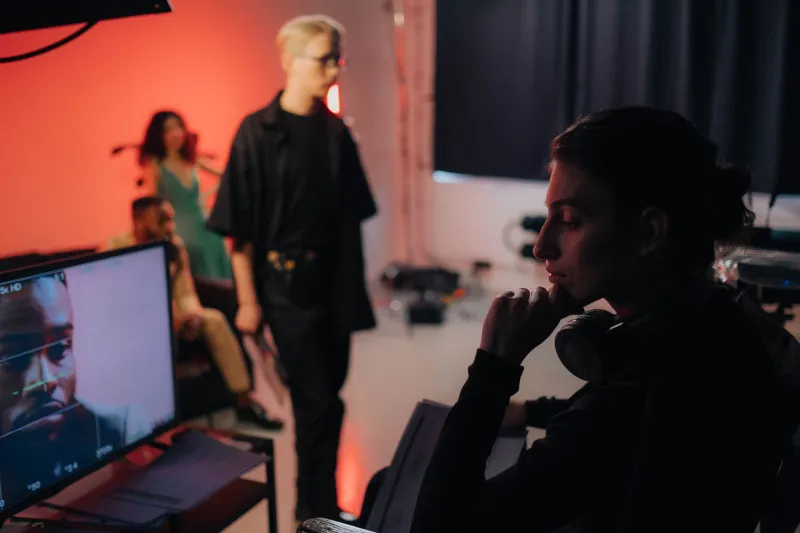
There's a shorthand in the film industry for when a director and actor find their groove: they stop explaining things to each other. The notes get shorter. The trust gets deeper. The work gets better. For Tsugumi Kataoka, that kind of shorthand hasn't happened just once — it's happened several times over, with filmmakers who keep returning to her like she's the missing piece they didn't know they were looking for.
So what is it about her that makes directors want to come back? And what do those recurring collaborations actually produce on screen?
Trust Is the Foundation — But It's Not the Whole Story
It would be easy to reduce repeat collaborations to simple comfort. Directors work with actors they like. Actors work with directors who treat them well. That's real, but it's also surface-level. What's happening with Kataoka's most notable director relationships goes deeper than professional ease.
The directors who have circled back to her describe something harder to name — a quality in her performance that they couldn't fully access the first time, and a curiosity about what would happen if they pushed further. There's a sense that each project with her reveals a new layer, and that the previous film was almost a rehearsal for what comes next.
That dynamic is rare. Most actors, when they find a director they trust, deliver what's expected of them. Kataoka, by contrast, seems to unsettle even her most familiar collaborators — in the best possible way.
Reading the Room Before the Room Exists
One of the things directors consistently note about working with Kataoka is her pre-production instinct. She comes to set having already done the emotional archaeology — not just learning lines, but understanding the thematic architecture of the whole project. Directors who've worked with her more than once say the second collaboration is different because she already knows how to speak their visual language.
With some filmmakers, she's developed a kind of call-and-response. The director sets up a shot with a particular emotional expectation; Kataoka delivers something adjacent to it, something slightly off-center, that ends up being more truthful than what was originally imagined. Repeat collaborators have learned to leave room for this. They've stopped over-directing her in certain moments because they've seen what happens when they don't.
That's a significant shift in creative dynamic — from director-led to genuinely collaborative — and it takes time and mutual trust to get there.
The Quiet Ones and the Kinetic Ones
What's interesting about the directors who return to Kataoka is that they don't all share the same visual style. Some work in long, slow takes with minimal cuts — the kind of filmmaking that demands an actor sustain emotional presence across extended stretches of time. Others prefer kinetic, tightly edited sequences where every beat has to land instantly.
Kataoka thrives in both environments, which is part of why she keeps getting called back across such different creative contexts. In slower, more meditative work, she does what she does best: she sits inside a moment and lets it breathe until it means something. In faster, more urgent work, she compresses that same emotional depth into micro-expressions, a shift in posture, the way she holds a cup of coffee.
Directors notice this adaptability and it makes her a more valuable collaborator over time. They're not just getting the same performance in a different costume — they're getting someone who has genuinely absorbed their aesthetic and is responding to it.
What Repeat Collaborations Reveal About Her Artistic Instincts
Here's the thing about being called back: it means you left something behind worth returning to. Not just a good performance, but a question — something unresolved, something the director wants to explore further with the same creative partner.
For Kataoka, the pattern of repeat collaborations suggests a very specific artistic instinct: she gravitates toward filmmakers who are interested in complexity over resolution. The directors who keep working with her aren't the ones looking for easy emotional payoffs. They're the ones who want to sit in the ambiguity for a while, who trust their audience to meet them halfway.
That alignment isn't accidental. Kataoka has talked — carefully, sparingly — about how she evaluates potential projects, and one of the things she consistently returns to is the question of whether the filmmaker is comfortable with uncertainty. Can they hold a scene open without rushing to close it? That quality, it turns out, is also what makes a director want to come back.
The Long Arc of a Creative Partnership
What's most compelling about Kataoka's repeat collaborations isn't any single film — it's the trajectory. When you line up the projects she's made with the same directors across several years, you can see an evolution that wouldn't be visible in the individual works. Characters who were closed off become more permeable. Directors who favored control begin to build in more space. It's a genuine creative conversation happening across multiple films and years.
For fans who've followed her career closely, tracking these partnerships is one of the more rewarding ways to watch her work develop. The directors who keep calling her back aren't just making good movies with a great actress. They're building something together — a shared vocabulary, a mutual artistic project that keeps expanding.
And if the pattern holds, there are more chapters to come.