Painted, Drawn, and Dreamed: How Fans Around the World Are Making Tsugumi Kataoka Their Own
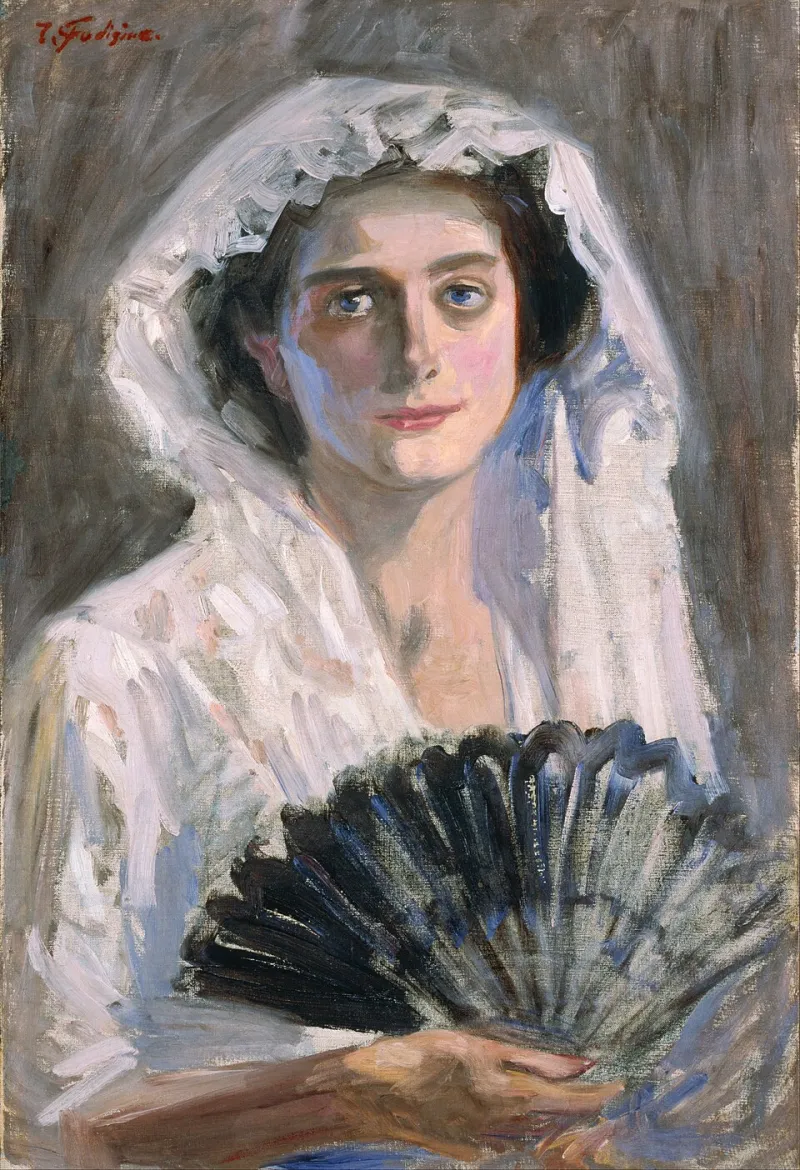
Photo: Fujishima Takeji, Public domain, via Wikimedia Commons
Scroll through the Tsugumi Kataoka tags on Tumblr, Twitter, or Instagram on any given afternoon and you'll find something that goes well beyond the usual fan appreciation posts. There are digital paintings rendered with professional precision. There are illustrated comics reimagining her characters in new scenarios. There are aesthetic mood boards that pull apart her on-screen looks with the seriousness of an art school thesis. And underneath all of it, there's a creative energy that feels like it's only picking up speed.
Fan communities have always made art. But the community that's coalesced around Kataoka over the past few years has some qualities that make it worth paying attention to — not just as a measure of her growing profile, but as a genuinely interesting cultural phenomenon in its own right.
A Community Built Across Borders
What's immediately striking about the Kataoka fan art world is how international it is. You'll find creators working in English, Japanese, Spanish, Portuguese, and Korean all contributing to the same shared visual conversation. American fans who discovered her through streaming are mixing it up with Japanese fans who've followed her career for years, and the result is a cross-pollination of aesthetic sensibilities that produces some genuinely unexpected work.
This isn't entirely surprising given Kataoka's own cross-cultural trajectory, but it's still worth noting. The community reflects the performer — someone whose appeal doesn't map neatly onto a single national audience or a single set of cultural references. Fan creators seem to be drawn to that multiplicity, using their work to explore what she means in their own specific context.
US-based fans in particular have brought a certain kind of energy to the mix. American fan culture around East Asian performers has historically been complicated by issues of exoticization and projection, but the Kataoka fan community — at least the most visible corners of it — seems more interested in genuine engagement with her work than in flattening her into a type. That's a meaningful distinction.
What Gets Made (And Why)
The dominant aesthetic in Kataoka fan art trends toward the cinematic. A lot of creators are drawn to specific scenes or emotional beats from her projects — a particular expression, a lighting moment, a costume — and render them in their own visual language. Digital illustration is the most common medium, though you'll also find traditional ink work, watercolor, and even some ambitious 3D renders.
Portraiture is huge. There's something about Kataoka's face — the expressiveness of it, the way emotion moves through it — that seems to invite close study. Fan artists return to it again and again, each interpretation slightly different, each one trying to pin down something that keeps shifting.
Character-focused work is also prominent, especially for roles that resonated deeply with American audiences. When a particular performance breaks through, the fan art follows almost immediately — a creative wave that functions as a kind of collective processing of the emotional experience of watching her work.
Fan fiction exists too, though it's a smaller slice of the community. Writers tend to explore the interior lives of her characters in ways the source material doesn't, or imagine crossovers and alternate universes that put her characters in conversation with other fictional worlds. It's a form of appreciation that's less about Kataoka herself and more about the characters she's built, which is its own kind of compliment.
The Creators Behind the Work
We reached out to a handful of fan artists who've built followings within the Kataoka fan community, and a few themes came up consistently when we asked what drew them to her work specifically.
Emotional specificity came up a lot. More than one creator described being struck by the precision of Kataoka's performances — the sense that every micro-expression is a deliberate choice — and finding that precision both inspiring and challenging to capture. "She gives you so much to work with," one illustrator told us. "Every frame is basically already a reference."
Several creators also mentioned the way her cross-cultural presence opens up creative space. Working with a performer who operates fluently in multiple cultural contexts gives fan artists more to play with — more visual languages, more aesthetic traditions, more ways in.
And a number of US-based fans talked about discovery: the experience of finding Kataoka through an American streaming project and then going back to explore her earlier Japanese work, and how that journey changed the way they understood her. That narrative of discovery shapes a lot of the fan content, which often functions as an invitation to others to take the same trip.
How the Community Has Evolved
Long-time fans have noticed a real shift in the fan art landscape over the past couple of years, tracking roughly with Kataoka's increased visibility in the American market. The community is larger now, obviously, but it's also more diverse in terms of both the creators involved and the kinds of work being produced.
Early fan art tended to focus heavily on a narrow set of iconic images — specific looks, specific moments. As the community has grown, there's been more experimentation, more willingness to interpret rather than just reproduce. That's a sign of a maturing creative ecosystem, one that's moved past pure admiration into something more like genuine artistic dialogue.
Social platforms have shaped this evolution in obvious ways. The rebloggable, shareable nature of fan art on Tumblr and Twitter means that a single strong piece can travel far and fast, bringing new creators into the community. Fan art essentially functions as its own form of promotion — and for a performer building an international audience, that organic creative energy is genuinely valuable.
Why It Matters
Fan art gets dismissed sometimes as a footnote to the real story — the performances, the projects, the industry milestones. But the creative community around Tsugumi Kataoka is part of her story in a way that's hard to separate out. It's evidence of the depth of connection her work creates, the way it lodges in people's imaginations and refuses to leave quietly.
For fans who are part of that community, it's also just a good time. There's real joy in the tags on a Friday night, in finding a new artist whose work makes you see a performance differently, in being part of something that's collectively building something bigger than any one person's appreciation.
That's what fan communities do at their best. And this one, built around a performer who keeps giving them more to work with, seems like it's just getting started.