From Brooklyn to Boise: Why Tsugumi Kataoka Plays Differently Across America
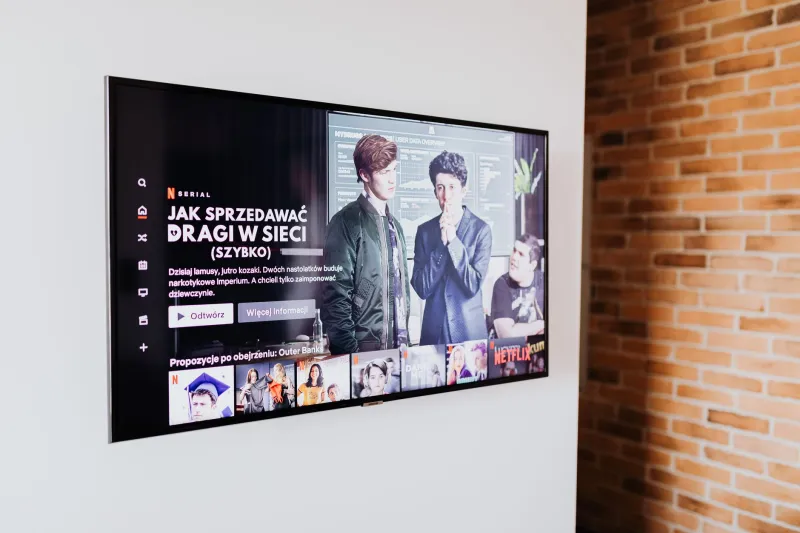
Streaming has flattened geography in ways that would have seemed impossible fifteen years ago. A drama series shot in Tokyo can land in a living room in Tulsa the same night it hits screens in Los Angeles. The algorithm doesn't care about zip codes.
But audiences do. And when you look closely at where and how Tsugumi Kataoka's work connects across the United States — not just that it connects, but why and how — what emerges is a genuinely fascinating map of a country in the middle of renegotiating what it wants from its entertainment.
The Coastal Baseline
Start with the obvious: Kataoka's strongest concentrated audiences are in the major coastal metros. New York, Los Angeles, the Bay Area, Seattle, and Boston all index high for her projects, and that makes a certain kind of surface-level sense. These are cities with large Asian-American populations, robust arts cultures, and viewers who have been advocating for exactly the kind of nuanced representation she delivers.
But calling it "the Asian-American audience" misses most of what's actually happening in these markets. The demographic breakdown of her coastal viewership is notably diverse — not because her work is trying to be universal in the watered-down sense, but because craft tends to travel. When something is made with genuine specificity and skill, it tends to find people who appreciate specificity and skill, regardless of their background.
In New York particularly, her work has developed a following in communities that don't overlap much otherwise: film-school types, second-generation immigrants from entirely different cultures who recognize something in the specific texture of her characters' experiences, and older viewers who found her through foreign-film-adjacent recommendation algorithms and stayed.
The Midwest Surprise
Here's where it gets more interesting. Streaming data — aggregated, anonymized, and increasingly available to analysts — has shown consistent upticks for Kataoka's projects in markets that the conventional industry wisdom would have flagged as unlikely: mid-sized Midwestern cities, college towns in Ohio and Michigan and Wisconsin, and suburban communities in states that don't typically appear on the "diverse audience" radar.
The explanation isn't complicated once you look at the demographics more carefully. These communities are changing. University towns in the Midwest have seen significant growth in international student populations and their families. Mid-sized cities have become landing points for immigrant communities that don't make national headlines but are reshaping local culture in real and lasting ways.
There's also something else happening. In communities where the dominant culture has historically been homogeneous, there's a growing appetite — particularly among younger viewers — for content that feels like it's showing them a world they haven't seen before. Kataoka's work doesn't explain itself or apologize for its cultural specificity, and that quality resonates with viewers who are, in their own way, tired of content that assumes they can only handle what they already know.
The South's Complicated Relationship
The South presents a more layered picture. Urban centers — Atlanta, Houston, Dallas, Charlotte — perform similarly to coastal cities, reflecting both growing Asian-American communities and the general trend toward diverse content consumption in major metro areas.
Outside those cities, the picture is more variable. Some of Kataoka's quieter, more contemplative projects underperform in rural Southern markets where genre entertainment tends to dominate streaming habits. This isn't a judgment — it's just the reality that different communities have different viewing rhythms, and a slowly-paced character study requires a different kind of audience investment than a thriller.
What's notable, though, is that her projects with stronger genre elements — anything with a clearer narrative drive or higher emotional stakes — perform meaningfully better in these markets than comparable projects featuring Asian-American leads from ten years ago. The floor has risen. The baseline assumption that these audiences won't show up is no longer being confirmed by the data.
What Authenticity Actually Sells
There's a debate that runs through entertainment industry circles about whether "authenticity" is a real commercial driver or a value that liberal coastal audiences project onto their viewing habits. Kataoka's regional spread is useful evidence in that debate.
If authenticity were only valued by a specific demographic cluster, her numbers would look different. They'd be concentrated and consistent across a narrow band of markets. Instead, they're distributed in a way that suggests the value of cultural specificity is genuinely more portable than the industry long assumed.
The caveat is that it's not automatic. Authenticity isn't a magic word that opens every door. What Kataoka's regional performance actually shows is that authenticity, combined with craft, combined with stories that have genuine emotional stakes, can travel. The craft is load-bearing. You can't replace it with good intentions.
The Streaming Context That Makes It Possible
None of this regional diversity would be visible — or even possible — in a pre-streaming landscape. A project with Kataoka's profile twenty years ago would have had limited theatrical distribution, concentrated in major markets, and its reach would have been defined by whoever decided to program it.
Streaming changed the equation completely. A viewer in Des Moines who might never have encountered her work through traditional distribution channels can now be served a recommendation based on what they've already watched. The algorithm doesn't know or care about geography. It knows about taste.
This is, genuinely, one of the more underreported ways that streaming has democratized representation. It's not just about what gets made — it's about what gets seen, and by whom, and where.
What the Map Actually Tells Us
Step back from the data and look at the shape of Kataoka's American audience, and what you're really looking at is a portrait of a country in transition. The communities that are connecting with her work are disproportionately communities that are themselves changing — becoming more diverse, more globally connected, more interested in stories that don't default to a single cultural perspective.
That transition isn't uniform. It isn't finished. And it doesn't mean every market is moving at the same pace.
But the direction of travel is clear. And Tsugumi Kataoka's regional map is, among other things, a pretty compelling piece of evidence for which way things are heading.