The Bridge Between Two Worlds: How Tsugumi Kataoka Is Reshaping American Appetite for Japanese Entertainment
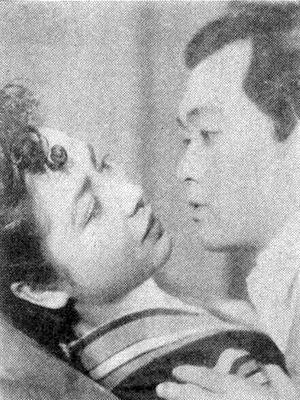
Photo: 松竹株式会社, Public domain, via Wikimedia Commons
There's a moment that a lot of American viewers describe in almost identical terms. They're scrolling through Netflix or Crunchyroll late on a Friday night, they click on something because the thumbnail looks interesting, and then they end up three episodes deep at 2 a.m. wondering how they've never heard of this actress before. For a growing number of those viewers, that actress is Tsugumi Kataoka.
It sounds simple, maybe even accidental. But what's happening around Kataoka's career is anything but random. It's the product of timing, talent, and a massive shift in how entertainment crosses international borders — and she's right at the center of it.
The Streaming Revolution Changed Everything
Let's rewind for a second. Before the streaming era took hold, Japanese cinema had a dedicated but relatively niche following in the US. You had your Kurosawa devotees, your anime crowd, and the occasional art house breakout. But mainstream American audiences didn't have a reliable pipeline into contemporary Japanese TV drama or film.
That changed fast. When platforms like Netflix began investing in Japanese original content and licensing deals, they didn't just add new titles to a library — they handed millions of American households a front-row seat to what Japanese entertainment had been doing all along. Suddenly, subtitles weren't a dealbreaker. Suddenly, a show set in Tokyo could trend in Tulsa.
Kataoka's work landed in this window at exactly the right moment. Her performances translated — not just linguistically, but emotionally. American viewers who'd never thought much about Japanese drama found themselves invested in characters she brought to life, and that's not something you can engineer with a marketing budget alone.
Breaking the "Asian Actor in Western Media" Ceiling
Here's where things get more complicated and, honestly, more interesting. The history of Asian actors in Western entertainment is... not great. For decades, Hollywood operated on a system that either sidelined Asian performers entirely or flattened them into stereotypes. The progress that's been made — and there has been genuine progress — came slowly and often through frustration.
What makes Kataoka's trajectory notable isn't that she's trying to "break into" Hollywood in the traditional sense. She's not auditioning for the token supporting role in a Marvel film. Instead, her influence is flowing in a different direction: American audiences are coming to her, on her terms, in her language, in her cultural context.
That's a meaningful distinction. It suggests that the old model — where an Asian performer had to be westernized or repackaged to find a US audience — is losing its grip. Viewers are increasingly comfortable, even enthusiastic, about engaging with stories that don't center American experiences. Kataoka's success is both a symptom of that shift and a driver of it.
What Industry Watchers Are Saying
Entertainment journalists and cultural critics in the US have started paying closer attention to how performers like Kataoka are moving through the industry. The conversation isn't just about individual careers anymore — it's about what the demand for international content means for how studios and platforms make decisions.
When a Japanese actress builds a genuine fanbase in the US without a Hollywood vehicle or an English-language crossover project, it tells streaming executives something important: audiences don't need a familiar entry point if the work is compelling enough. That's a data point that influences acquisition budgets, subtitling investments, and marketing strategies.
For Kataoka specifically, the fan engagement coming from American audiences has been notably organic. Social media discussions, fan communities, and recommendation threads on platforms like Reddit and Letterboxd have amplified her work in ways that feel grassroots rather than manufactured. That kind of word-of-mouth is hard to fake and even harder to ignore.
The Cultural Conversation She's Sparking
Beyond the business side of things, Kataoka's growing American profile is feeding into a broader cultural moment. There's real appetite right now — especially among younger American viewers — for stories that reflect the world's actual diversity rather than a Hollywood-filtered version of it.
Japanese cinema has always had a sophisticated emotional vocabulary, a willingness to sit with ambiguity and restraint in ways that American mainstream entertainment sometimes avoids. Kataoka's performances carry that sensibility, and American fans are responding to it. They're not just watching her work — they're talking about it, writing about it, and using it as a gateway into Japanese culture more broadly.
That ripple effect matters. When an actress becomes a cultural entry point, she's doing something that no amount of diplomatic soft power or tourism marketing can quite replicate. She's making people genuinely curious.
What This Means for the Next Generation
Perhaps the most significant aspect of Kataoka's impact is what it signals for performers who come after her. The path she's carving — building an international audience through excellence in her home market rather than chasing Western validation — is one that younger Japanese actors are watching closely.
It's a model that says: do your best work where you are, and the audience will find you. In an era when streaming platforms have genuinely global reach, that's not naive optimism — it's a viable strategy.
For American audiences, the upside is equally clear. The more performers like Kataoka break through on their own terms, the richer and more varied the entertainment landscape becomes. And honestly? That's a pretty great deal for everyone scrolling through their queue on a Friday night.